
Highlights from Trisha Biggar’s Star Wars’ costumes. This blog shares details on a few of the costumes from the book Dressing a Galaxy.
As a HUGE Costume Design enthusiast I knew I had to get my hands on Trisha’s Biggar’s book, Dressing a Galaxy. The costumes have forever inspired me and stand out to me as a true standard for what is possible with costume design. Her research, attention to detail, and craftsmanship are extraordinary.
Trisha Biggar pulled from many sources to create the costumes you see in the Star Wars prequels. Biggar was strongly influenced by different cultures and periods, which is reflective in her use of materials. According to her Production Designer on these films, “She is passionate about the history of costumes, and she is always conscious of how her own designs relate to that history.” Click on the photo below or this link for more insight on cultural and historical influences on Biggar’s design.
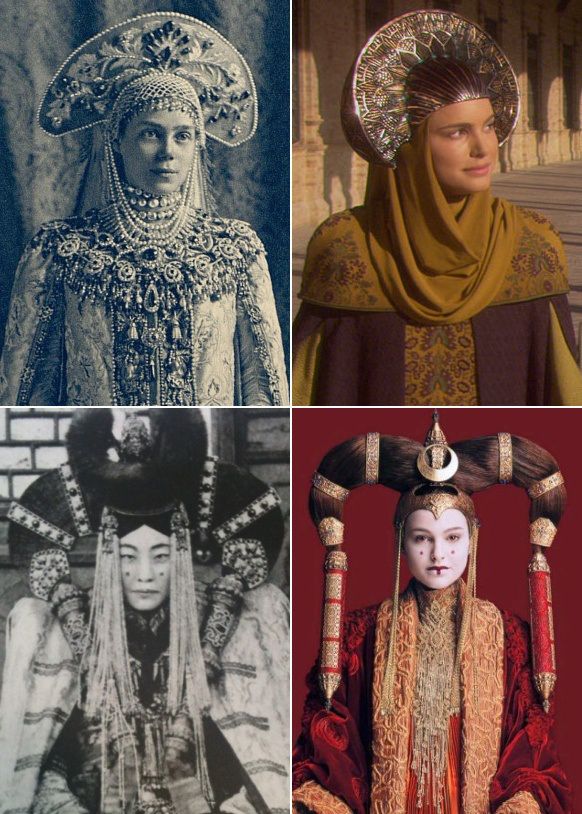
As with a lot of films a great deal of work went in prior to shooting. The art department began prepping for Episode I three years before they began shooting. Nine months before they began principle photography, Biggar began to work full time. For Episode I she created a facility at a studio with 60 to 100 people. They worked long hours to create the film’s hundreds of costumes. They sourced materials from fabric fairs all over the world and worked directly with manufacturers in China, India, and Hong Kong.
Almost 100 were created for the the Star Wars prequels. A fan favorite of these is Padme Amidala’s wedding dress featured in the scene showing her marriage to Anakin Skywalker on Naboo. This wedding dress was made from an antique Victorian era bedspread. The bedspread was not quite large enough for the predesigned dress, but Biggar and George Lucas loved the lace so much that they altered the previous design.
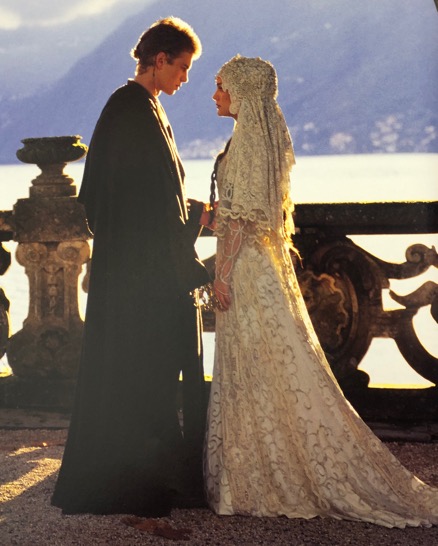

Utilizing the talents of an embroidery facility in Sydney, they appliqued with a manual satin stitch the available embroidered sections from an antique lace bedspread onto eleven silk tulle pattern sections that would eventually become the wedding ensemble. Since the amount of vintage fabric was limited, Biggar’s team made 300 yards of French-knit braid for Cornely scrollwork, to combine and meld the panels. The finished dress was studded with pearls.
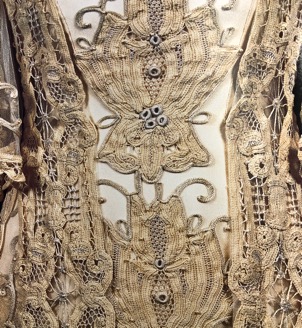
The wedding dress was not the only costume in the film to incorporate vintage pieces and remnants. According to Biggar, “The distinctive qualities of antique textile pieces always appeal to me, and I particularly like being able to resurrect vintage materials and trimmings, revitalizing often delicate bits of embroidery, beadings, or lace from the Victorian era (or earlier) and incorporating them into new garments.”
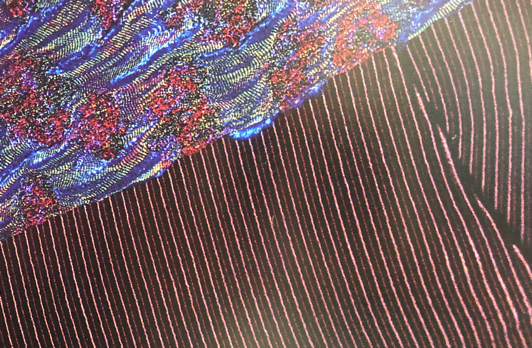
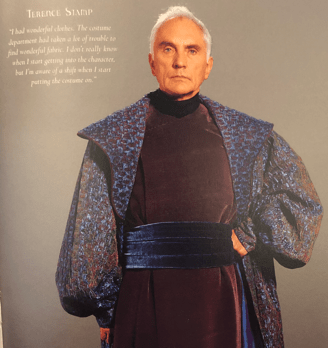
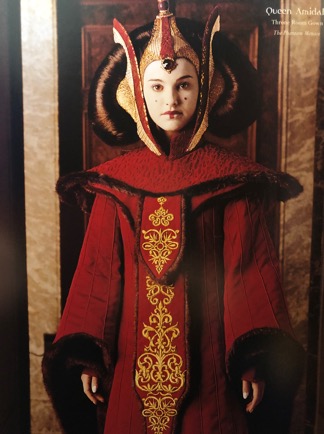
Biggar happened across some rolls of vintage 1930s and ‘40s fabric originating in France. She used these to create several costumes including Chancellor Valorum’s bruise-colored corded silk underrobe (see above) and the sunray-pleated underdress in orange shot silk in Amidala’s Throne Room Costume. The neck of Queen Amidala’s Throne Room Costume was enriched by placing layers of gold glass-bead fringing and Victorian bullion-embroidered lace motifs over the yoke area (below).
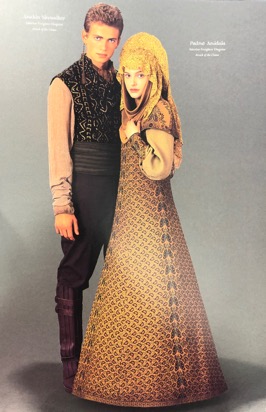
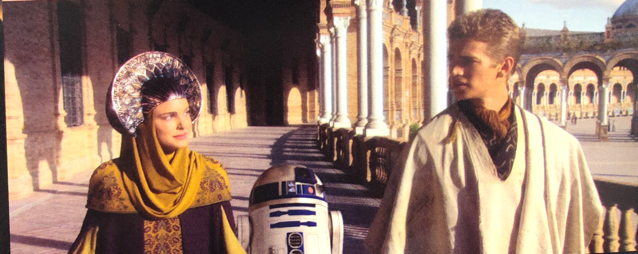
Antique items were used in the costumes of Anakin Skywalker as well. Biggar used items from Africa for the creation of his Interior Freighter Disguise costume. It consists of his Jedi trousers and a taupe raw-silk open-weave undershirt. Biggar also used African mud cloth fabric for a double-breasted vest. She completed the look with a dark green cummerbund, and a tan-and-green neck scarf, combined with a woven poncho in an off-white, vintage African fabric.
If you’re anything like me, I’m sure you were nerding out reading that. It’s so neat to see all that fashion from “a galaxy far, far away” has to offer. I hope this motivates you to rewatch the films and check your local library for Trisha Biggar’s book! May the force be with you!
Photos and information for this blog post were taken from:
Biggar, T. (2005). Dressing a Galaxy: The Costumes of Starwars.China: Palace Press International.
 Hannah Pennell Communication