

When it comes to the death penalty, we talk about the life of the perpetrator but oftentimes we don’t count the rest of the lives at stake. These peripheral victims stand to lose a lot if the death penalty is not abolished.
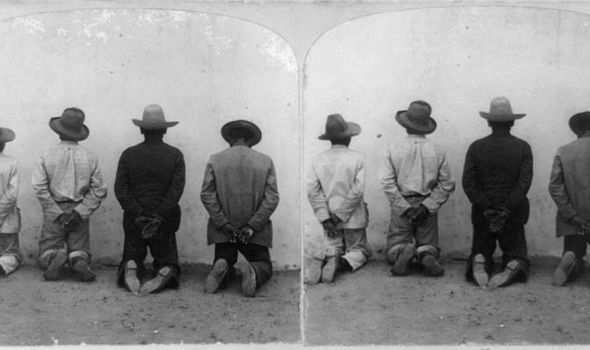
Studies have shown that one of the most compelling arguments against the death penalty is that there are innocent people convicted and killed. These are the truest victims of a practice that harms everyone it touches. The below article examines the other victims that we don’t always count.
1. The Families of the Victims
Often times the victims’ families suffer a disempowering path to “justice”. Against the popular narrative, a lot of family members feel that the death penalty does not provide justice or closure for either side. “For many families, execution has simply meant reliving the horrific event year after year, decade after decade, through the slow process of carrying out the death penalty.” They are revictimized for imaging a different path to justice, one that rethinks our punitive justice system and favors a restorative approach. “Many crime victims feel that execution circumvents true justice. These survivors would rather see the offender take responsibility for what they caused rather than just terminating their lives.”
The death penalty gives victims’ families a figment of justice. One death can never equal out another or take away the pain of that loss. The execution leaves in its wake more wounded victims in the form of the executed’s family members. “Many of those who have healed best have not sought the death penalty, but found closure in forgiveness and restorative justice, or even in life in prison for the killer.”
For more on what restorative justice could look like for all parties please read Shane Claiborne’s book Executing Mercy.
2. The Innocent Victims
“Death row is a nightmare to serial killers and ax murderers. For an innocent man, it’s a life of mental torture that the human spirit is not equipped to survive.”
― John Grisham
The fact that there are innocent men incarcerated for crimes they have not committed should cause us to reconsider the death penalty for any man. “For every nine executions there has been one exoneration. And for every hundred people condemned to die, four are likely innocent.” Those stats are some of the most convincing for me against the death penalty. Better every man convicted serve life, then one more innocent man be killed.
3. The Executioners and Correctional Staff
It is clear that the cost on the correctional staff is vast. Our system is set up to place separation between correctional staff and inmates, but oftentimes years long relationships are formed between these individuals who are later killed in close proximity. “A 2016 documentary, ‘There Will Be No Stay,‘ portrays the trauma experienced by correctional staff that carried out executions. “Execution team members experienced acute post-traumatic stress disorder…Others suffered from similar nightmares, insomnia and addiction.”
4. Society and Our Country as Whole
There is no man so bad that he cannot be made good for something. No man should be put to death, even as an example, if he can be left to live without danger to society.”
― Jean-Jacques Rousseau
Use of the death penalty says a lot of about the type of place a country that uses it aspires to be. Currently the U.S. ranks towards the top along with Syria, China and Vietnam. It conveys a lack value for human life and a clear misunderstanding of the cycle of violence. For a country to place value on human life, they need to understand that all human life is included. Executing perpetrators robs victims of the opportunity to experience restorative justice and true forgiveness. Both are essential to human flourishing. The death penalty ultimately costs every party involved so much. Anger may say that an eye for an eye is the path to justice, but the only justice worth having is laced with repentance, mercy and forgiveness. Pursuing this kind of justice is the path to true human flourishing.
“The death penalty is not about whether people deserve to die for the crimes they commit. The real question of capital punishment in this country is, Do we deserve to kill?”
― Bryan Stevenson
 Hannah Pennell Communication