
By Hannah Pennell
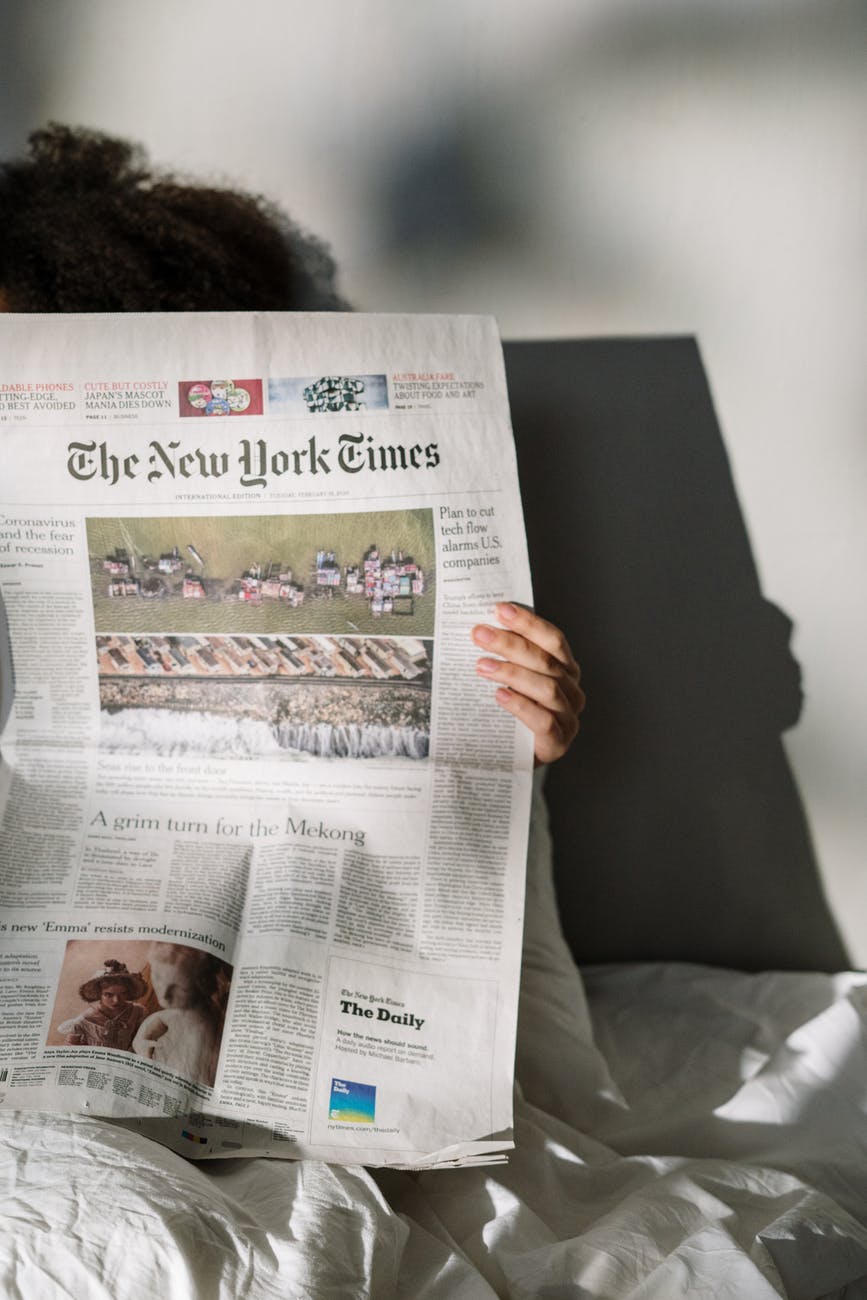
“The press is protected [by the First Amendment] not for its own sake but to enable a free political system to operate. In the end, the concern is not for the reporter or the editor but for the citizen critics of the government.” -Anthony Lewis, New York Times
Given the current political unrest of our country, many Americans have finally found it necessary to engage the political machinations of the American system. One of the main tools that enables us to do this is mass media. We have seen the media continue to fail in its job of enabling “the public to assert meaningful control over the political process by providing them with information needed for the intelligent discharge of political responsibilities.” Instead we have seen our media “inculcate and defend the economic, social, and political agenda of privileged groups that dominate the domestic society and state.” It is for these exact reasons that I began to realize my own need for a framework to siphon media messages I receive. I needed a framework to identify lies, assist me in researching answers and enable me to craft ethical responses. These guidelines will help you hold the media to a higher ethical standard.
Sweeping Claims and Generalizations vs. Specific Facts and Incidents
In a click driven world, the media is constantly pushed to out sensationalize their previous work. This is why it is not an uncommon practice for the most extreme headline to be chosen to drive engagement. I find it important to not just look at the headline, but to examine the underlying story from all angles.
Headlines are often crafted with bias, keep this in mind when you read the article. Take note of sweeping claims and generalizations that allow the reader to do the least amount of mental processing and file characters within the story into “us” and “them” categories.
Check the sources. Are there sources? Note their credibility in other contexts.
Offering some, but not ALL of the information
For any topic of news, I make sure to check news outlets that are right, left and moderate. I am then able to weigh out what common facts were listed and from those facts I am then able to form opinions more of my own making. Oftentimes news articles will leave out facts that are not supportive of their biased claims.
As Karl Popper noted, “ Whenever a theory appears to you as the only possible one, take this as a sign that you have neither understood the theory nor the problem it was intended to solve.”
Benefit of the Doubt – Innocent Until Proven Guilty
In a country whose judicial system is supposed to be founded on the idea of “innocent until proven guilty” the media does a great job of throwing the first stone. A clue I often use to tell me how ethical and unbiased a piece will be is their framing of guilt versus innocence. How quickly do they cast the victim and villain roles? The media should present evidence but make no assumptions of guilt, nor cast the villain. An ethical society should be able to draw these conclusions for themselves with regard to personal failings and criminal guilt will be determined by trial in a court of law.
Advocating Only for the Powerful
Articles can often seem to have a bend in favor of a particular person or party. If the goal of the media is to allow society “meaningful control over the political process” it should be using its voice to challenge power and highlight marginalized groups. Power is often central to political stories. When reading, I ask myself the question, “Who is seeking power here?” Asking this will allow you to see more clearly who, among the players, the media is trying to win power for.
Ad Hominem Attacks
“An ad hominem (Latin for ‘to the man’ or ‘to the person’), short for argumentum ad hominem, means responding to arguments by attacking a person’s character, rather than to the content of their arguments. When used inappropriately, it is a fallacy in which a claim or argument is dismissed on the basis of some irrelevant fact of supposition about the author or the person being criticized.”
Whenever you read pieces that attack a player out of context and do not seek to first address the ideas in question, it should cause you to pause. Often times personal attacks, name calling or labeling are lazy arguments and a way for the news media outlet to get out of presenting the associated ideas. This robs the public of yet another chance to form their opinions on fact and can often manipulate the public into believing a false narrative.
Confusion, Emotions, and the Importance of Taking Your Time
“The public is exposed to powerful persuasive messages from above and is unable to communicate meaningfully through the media in response to those messages….Leaders have usurped enormous amounts of political power and reduced popular control over the political system by using the media to generate support, compliance, and just plain confusion among the public.”
You are allowed to be wrong. You are allowed to seek truth. If you need to form an opinion on something, take your time and research. News can often have a heavy emotional push that drives hasty action. Take time to form your thoughts, direct your course and always be ready to readjust. I see this as an ethical duty. We are in many ways responsible for the influence we have on others and their opinions. If we seek to form a society that enables all humans to flourish, we should be trying our hardest to seek truth and to guide others toward it as well. Your words and what you do with the words of the media matter. Every time we enter into discourse we are shaping each other and society, for better or worse.
Resources:
W. Lance Bennett, News: The Politics of Illusion, 2d ed. (New York: Longman, 1988), pp.178-79
E.S. Herman, N. Chomsky, Manufacturing Consent: The Political Economy of the Mass Media (New York: Pantheon Books, 1988), pp. 298
 Hannah Pennell Communication