
I didn’t always believe eradicating the death penalty was something essential to the flourishing of human society, but what I have shared below helped change my mind.
I’ve seen A LOT of crime television in my day. I remember watching episodes till the end and what I thought was righteous anger would well up in me as some of these perpetrators were given the death penalty. I would think to myself, “Good. Justice was served, they got what they deserved.” What eventually altered my mind about the death penalty a few years later was a journey through numerous books, one month on jury duty, and being clearly presented with facts about the effects of the death penalty on the victims’ families, correctional staff and society. I’d like to share with you some of things I’ve found helpful in examining the death penalty in the hopes that you will see the death penalty as a practice that harms everyone it touches.
1. Shane Claiborne’s Book Executing Grace
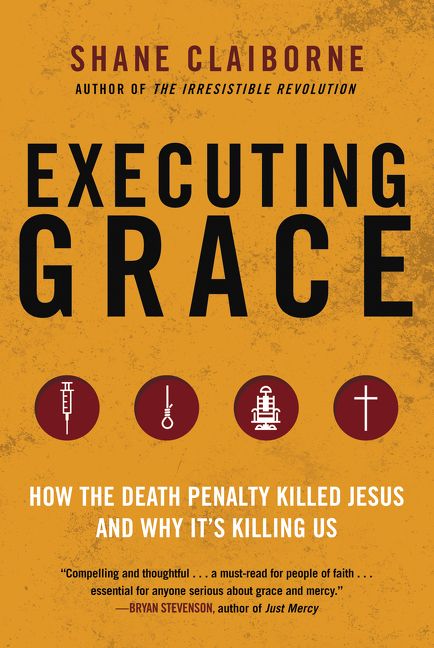
When it comes to the death penalty, I expected this book to talk about cost and death count, I even assumed it would talk about the wrongfully convicted, but I was very surprised to hear about the peripheral victims. The victims we don’t often think of are the family members and the correctional staff. When it comes to family members, this book does a great job or showing that “Many of those who have healed best have not sought the death penalty, but found closure in forgiveness and restorative justice, or even in life in prison for the killer.” Secondly it addresses the psychological toll on the correctional staff and executioners. The book shares a story from a prison warden who oversaw 5 executions and speaks about the toll on his employees and his own mental health. He remarked that, “killing someone, even a murderer, also kills some of the good in you.”
2. The Innocence Project

More often than we want to recognize, some innocent defendants have been convicted and sentenced to death. – Supreme Court justice Sandra Day O’Connor.
The fact that there are innocent men incarcerated for crimes they have not committed should cause us to reconsider the death penalty for any man. The Innocence Project works to exonerate the wrongly convicted and made me aware that wrongful convictions do happen and often times are racially biased. “For every nine executions there has been one exoneration. And for every hundred people condemned to die, four are likely innocent.” Those stats are some of the most convincing for me against the death penalty. Better every man convicted serve life, then one more innocent man be killed.
3. Jury Duty and the Role of Individual Experience
About a year and a half ago I spent a month on jury duty for a murder trial. That month exposed me to some dark scenarios that happen on a regular basis in the underbelly of my city. The perpetrator grew up in a drug filled home and was afforded few of the privileges others have been. It caused me to evaluate the way in which the circumstances we are born in affect us. It caused me to question if we as humans have the right to take another life and to determine what justice is. We are very quick to assume our innocence in the same situation, when we have never walked that path. I think any person who would blindly say they have the right to take a life for a life is missing the point of what true justice, true innocence, and true restoration could be. That’s why I am sharing these things with you. I want Americans to be able to enter into these conversations thoughtfully and emerge with an improved system that is equal parts mercy and justice. For us to do that, we need to evaluate the information in front of us humbly and decide what kind of nation and people we want to be.
There is so much more to learn about the true cost of the death penalty. For more information please check out these resources:
Death Penalty Information Center
All quotes in this article were taken from Shane Claiborne’s book Executing Grace.









 Hannah Pennell Communication